




By: Wakil Ahmad , Wakil Ahmad Kakar, Olasunkanmi A. Kolawole, Michael U. Mochu, Ifeyinwa H. Ofuase-Lasekan, Okelue E. Okobi, Emmanuel W. Stephen, Ivie S. Adoghe, Kelechi E. Oguzie
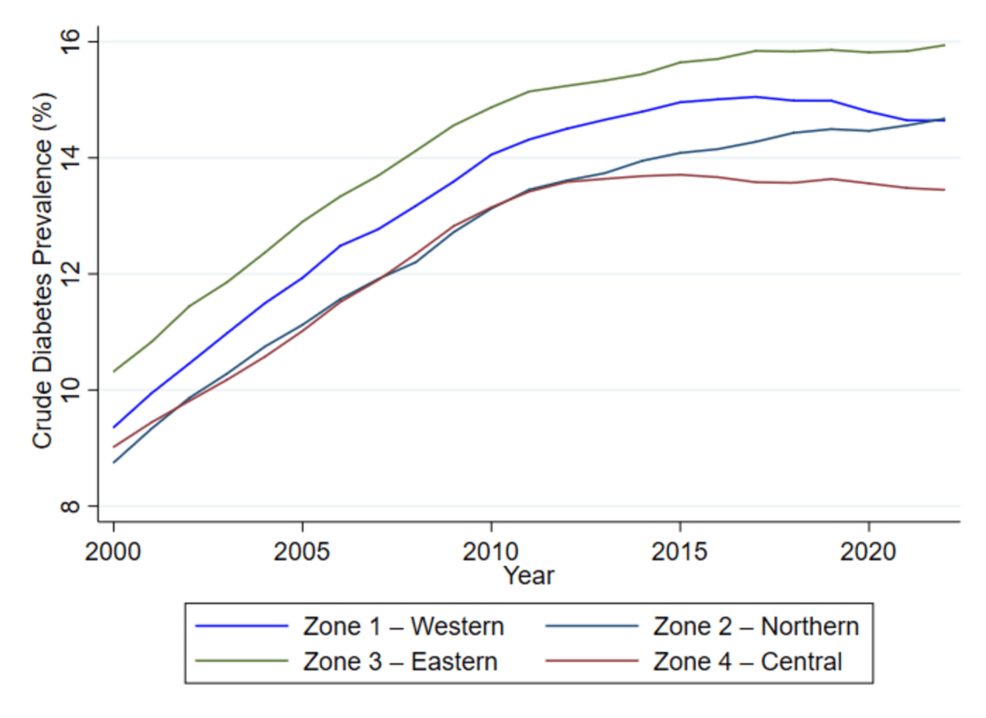
Background Diabetes remains a significant public health concern in Canada, with rising prevalence rates observed over recent decades. Understanding geographic and demographic patterns is essential for informing targeted prevention and resource allocation strategies. This study aims to examine trends in crude diabetes prevalence across four Canadian health zones from 2000 to 2022, using aggregated, age- and sex-stratified surveillance data, and with a focus on regional and sociodemographic disparities. Methods Data were obtained from the Canadian Chronic Disease Surveillance System (CCDSS), comprising annual counts of diabetes cases and population estimates stratified by age group, sex, and health zone. Crude prevalence rates were calculated and analyzed over time. A Poisson regression model with a log link and population offset was used to quantify temporal trends and assess differences by region, sex, and age group. Interaction terms were included to explore variation in trends across zones. Results Between 2000 and 2022, crude diabetes prevalence rose steadily across all regions, although the pace of increase varied. Zone 3 (Eastern) consistently showed the highest prevalence, whereas Zone 4 (Central) recorded the lowest levels by 2022. The Poisson regression model confirmed a significant annual rise in prevalence (β = 0.016, p < 0.001). Males had a significantly higher prevalence than females (β = -0.225, p < 0.001), and advancing age was strongly associated with a greater diabetes burden. Interaction terms between year and health zone indicated that temporal trends were not uniform across regions. Conclusion Diabetes prevalence in Canada has increased markedly over the past two decades, with substantial disparities across regions, age groups, and sexes. These findings underscore the need for region-specific diabetes prevention and control strategies, especially in high-burden zones. Continued surveillance and disaggregated analyses will be vital for addressing the evolving epidemiology of diabetes across the country.