



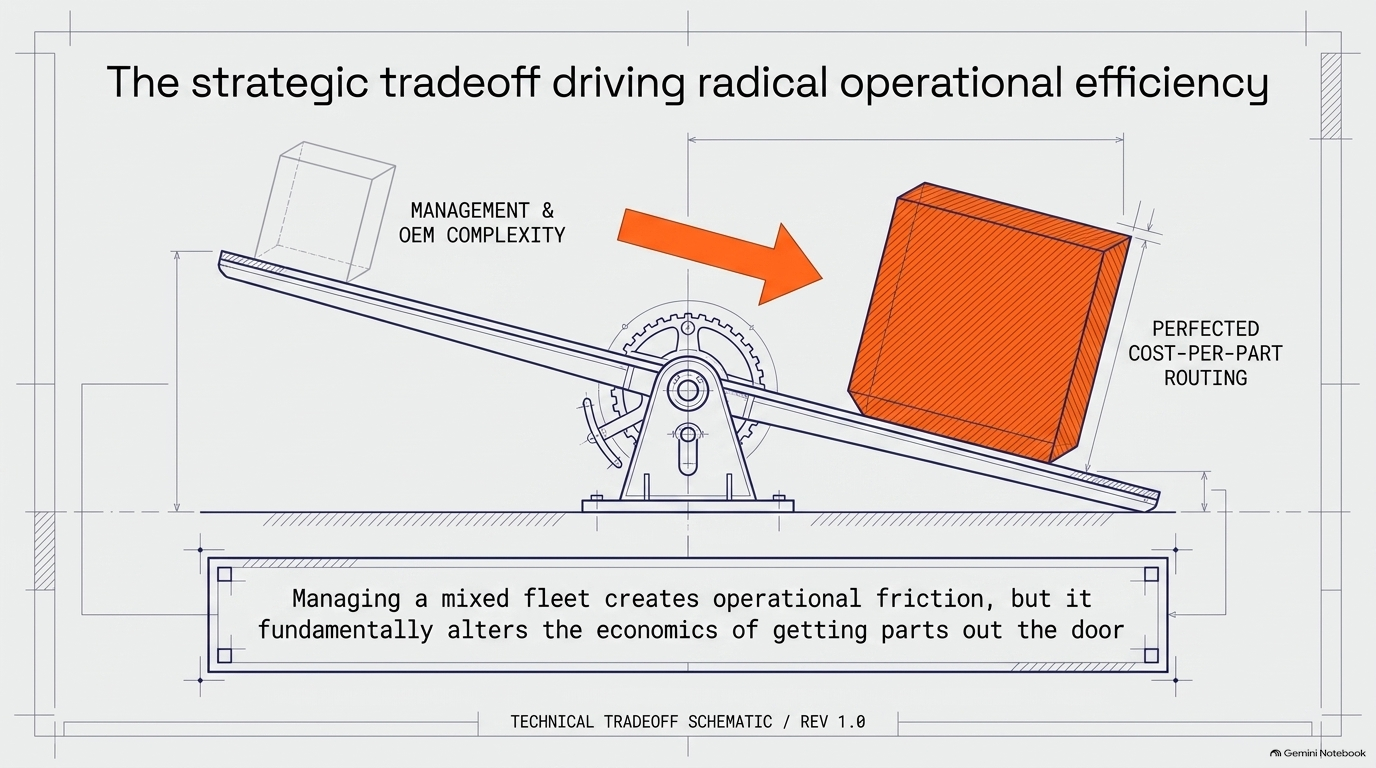
So far, most service bureaus and manufacturing companies stick to what they know. Not only for OCD reasons, but gleaming lines of identical LPBF machines are also arrayed on impossibly clean floors, equidistant. It looks lovely, of course; everything feels in order, in its place. And by following one general machine architecture and one company's logic, everything is easier, of course. There are some economies of scale, like discounts on powder and reusing certain equipment and software across the fleet. Training and operations are easier too. But, of course, we know why people stick to one vendor or one system. Trauma. It's a trauma bond. Implementing AM was so incredibly difficult and traumatic way back when that people are loath to go beyond what works. But now products have improved, and knowledge has spread as evenly as your powder. Best practices have evolved, and our happy tribe is more experienced and knowledgeable overall. What's more, we have better products from the established vendors. And we have new vendors who want to provide us with new machines and capabilities.
Joris Peels is a journalist at NewsBreak. He covers a range of topics within the realms of engineering and manufacturing, with a particular focus on 3D printing, digital health, and manufacturing automation. Joris is featured in notable publications such as RamaOnHealthcare and 3DPrint.com.